
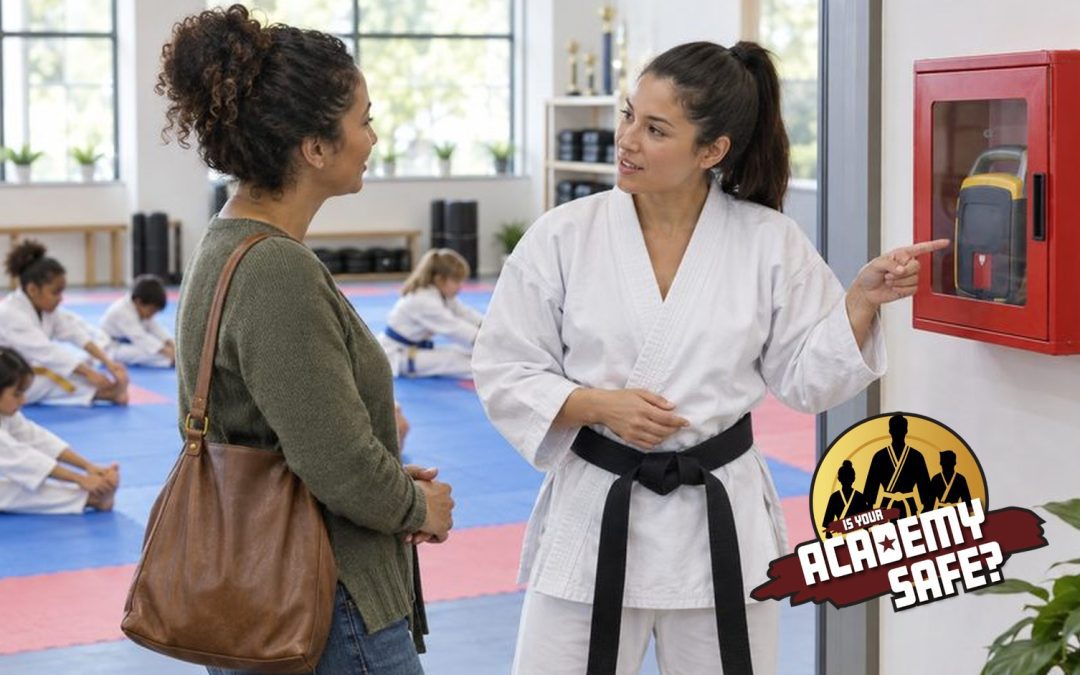
If you run a martial arts academy, gym, or dojo, an AED is one of the most important pieces of equipment you can own, and one of the most confusing to buy. Prices range from a few hundred dollars to more than two thousand, and the same models are sold new, recertified, and refurbished. This guide explains what an AED costs, the real benefits and downsides of buying new versus refurbished, and how to choose a unit your staff can count on.
Please note: this article is general information, not medical or legal advice. AED requirements vary by state and province, so check local rules before you buy or place a device.
Why Every Martial Arts Gym Needs an AED
Sudden cardiac arrest can happen to anyone on the mat, in the lobby, or in the stands. The American Heart Association estimates that about 356,000 adults are treated for out of hospital cardiac arrest each year in the United States, and only about 10.5% survived to hospital discharge in 2024.
Time is what matters most. Research published in Circulation found that survival from witnessed cardiac arrest falls 7% to 10% for every minute without intervention, and that people shocked by an on site AED before EMS arrived had a median survival of 40%. The AHA reports that the median EMS arrival time for cardiac arrest is more than six minutes in North America, even in dense cities. An AED on your wall closes that gap.
That is why an on premises AED is Pillar 8 of the Academy Safe 8 Pillars of Protection, and why Pillar 4 requires every coach to hold current CPR, first aid, and AED certification.
How Much Does an AED Cost?
When we checked in October 2026, listed prices looked like this:
- Recertified and refurbished AEDs: about $695 to $1,395 at AED Market, for models from HeartSine, ZOLL, Philips, and Cardiac Science.
- New AEDs: about $1,411 to $2,399 for new units and value packages at AED Market.
- Avive Connect AED (new): $1,899.99 on the Avive store, before the Academy Safe partner discount described below.
Prices change often, so treat these as a starting point and confirm on the seller’s site.
The purchase price is only part of the cost. Budget for replacement electrode pads and batteries (both expire), a wall cabinet and signage, a carrying case if you travel to tournaments, and CPR and AED training for your staff.
Buying a New AED: Benefits and Downsides
Benefits of a new AED
- Full manufacturer warranty. For example, the Avive Connect AED is warranted for five years, or eight years when registered with its REALConnect service.
- Current FDA approval and support. New models are on the FDA’s list of approved AEDs, so pads, batteries, and service will be available for years.
- Newer features. Some newer units add touchscreen guidance, connectivity, and remote self checks so you know the device is ready.
- Known history. You are the first owner, so there is no question about how the unit was stored or used.
Downsides of a new AED
- Higher upfront cost, often about double the price of a recertified unit of a similar model.
- Some models carry ongoing service fees after any free period, so read what is included.
Buying a Refurbished or Recertified AED: Benefits and Downsides
Benefits of a refurbished AED
- Lower cost. A recertified unit can cost hundreds of dollars less, which can let a small academy get an AED on the wall now instead of waiting.
- Proven models. Many refurbished units are well known models that organizations have used for years.
- Budget left for extras. The savings can cover a cabinet, spare pads, or staff training.
Downsides of a refurbished AED
- FDA approval risk. In 2015 the FDA began requiring premarket approval for all AEDs. The FDA warns that if your AED is not FDA approved, compatible pads and batteries may no longer be available after February 3, 2022. Some older models are now legacy devices. Always check the exact model against the FDA list before you buy.
- Shorter or unclear warranty. Warranty terms on recertified units vary by seller and are usually shorter than new. Get them in writing.
- Older technology. Older models may lack features like child mode on the same pads, voice coaching, or automatic self check reporting.
- Unknown history. Ask how the unit was tested and recertified, and whether it has ever been used in a rescue.
- Consumables add up. Make sure the unit ships with new, in date pads and a new battery, and price replacements before you buy.
New vs Refurbished AED: Quick Checklist
- Is the exact model on the FDA list of approved AEDs?
- What is the warranty, in writing, and who honors it?
- Does it include new pads and a new battery, and what do replacements cost?
- Can it be used on children? Kids classes make this important.
- Can your staff use it calmly under stress? Clear voice and visual prompts help.
- How will you know it is ready? Plan a monthly check. Our free AED and First Aid Kit Inspection Log makes this simple.
Option 1: Avive Connect AED, Academy Safe Partner
Academy Safe partners with Avive Solutions. The Avive Connect AED received FDA premarket approval on October 31, 2022. According to the Avive and Academy Safe partner page, it weighs 2.1 pounds, uses one set of pads for adults and children (with a Child button for ages 1 to 8), runs nightly self checks, and doubles as a training unit with a training cartridge. Its built in rechargeable battery means no battery replacements.
Academy Safe members and supporters can use code ACSAFE5 for an exclusive discount at checkout. See the Avive Connect AED partner offer.
Disclosure: Academy Safe has a partnership with Avive Solutions and may receive support from purchases made through our partner link. This helps fund our nonprofit safety work.
Option 2: Refurbished and New AEDs from AED Market
If budget is the main concern, AED Market sells new, recertified, and refurbished AEDs from HeartSine, ZOLL, Philips, Cardiac Science, and Defibtech, with free US shipping. Use the checklist above, confirm FDA approval for the exact model, and ask about warranty and pad and battery condition before you buy.
Where to Put Your AED
- Mount it in a visible spot near the mat, not locked in an office.
- Keep it reachable within seconds from every training area.
- Add clear AED signage and tell every coach and front desk staff member where it is.
- Bring it to tournaments, seminars, and off site events.
For more, read The Vital Role of AEDs in Martial Arts Academies and Why Every Gym Needs a Defibrillator and Proper AED Training.
Frequently Asked Questions
Is a refurbished AED safe to use?
A properly recertified AED from a reputable seller can be a good option, as long as the model is FDA approved, it passes testing, and it ships with new pads and a new battery. Avoid units with no testing records or no warranty.
How much does an AED cost for a small gym?
In October 2026, recertified units were listed from about $695 and new units from about $1,400 to $2,400. Add the cost of pads, batteries, a cabinet, and training.
Do AED pads and batteries expire?
Yes. Pads and most batteries have expiration dates. Check them monthly and replace them before they expire. Some newer units, like the Avive Connect AED, use a rechargeable built in battery.
Can an AED be used on a child?
Many AEDs can, using pediatric pads or a child mode. If you teach kids classes, choose a unit with a child option and train staff to use it.
Show Families Your Academy Is Prepared
An on site AED and trained coaches are two of the eight standards parents can verify through Academy Safe. Register your academy with Academy Safe to start the 8 Pillars of Protection process, and find more free templates in our safety documents library.
Academy Safe is a 501(c)(3) nonprofit, and you can support our work here.