
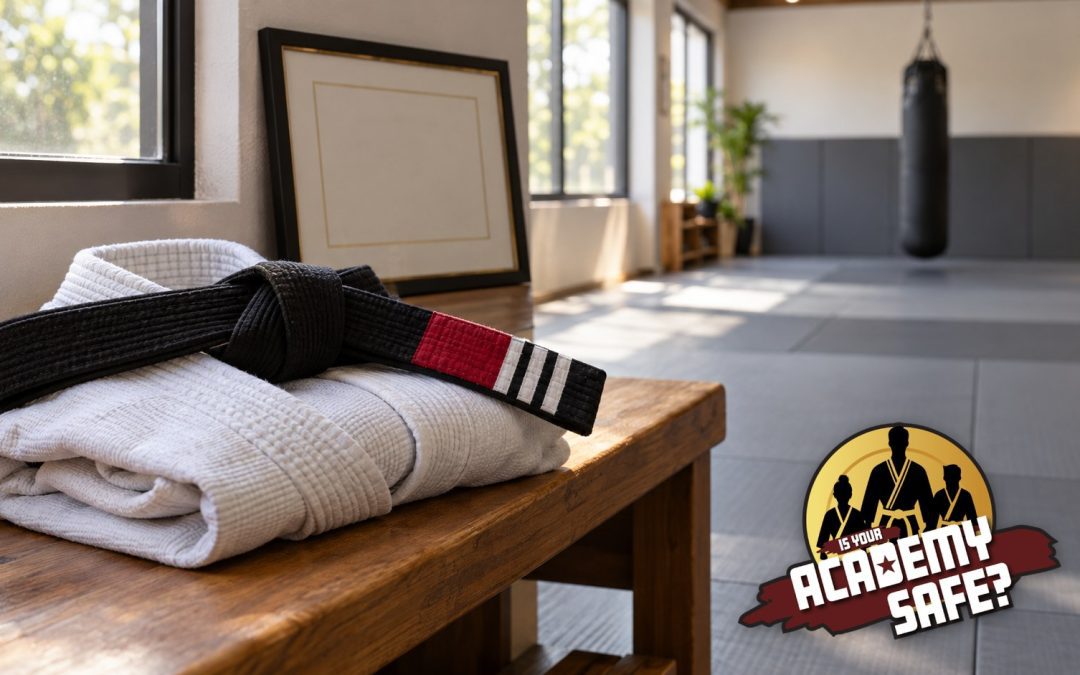
A belt on the wall says a lot about an instructor, but it does not prove much on its own. If you want to know how to verify a black belt before you enroll your child, the answer is lineage: who promoted the instructor, when, and whether that record can be checked. This guide walks parents through the questions to ask, the records that exist, and the warning signs worth noticing.
Belt and Lineage Verification is one of the 8 Pillars of Protection that Academy Safe looks for in an accredited academy. Rank does not replace background screening or safety training, but it tells you whether an instructor’s teaching history is real and accountable to someone.
How to Verify a Black Belt: Start With Lineage
Lineage is the chain of teachers behind a rank. A black belt is awarded by a specific person, usually a higher ranked black belt, who was in turn promoted by someone else. In Brazilian Jiu Jitsu, karate, taekwondo and most traditional styles, a legitimate instructor can name that chain without hesitation.
When you ask about lineage, you are looking for three things:
- A name. Who promoted the instructor to black belt, and any later degrees.
- A date and place. Roughly when the promotion happened and at which academy or organization.
- A record. A certificate, a federation listing, a teacher who will confirm it, or a photo or video of the promotion itself. With phones in every pocket, most promotions today are captured by someone, so it is fair to ask to see it.
Most instructors are proud of their lineage and happy to talk about it. A vague answer, a story that changes, or irritation at a polite question is worth noting.
Records You Can Check
The records available depend on the martial art. A few common examples:
Brazilian Jiu Jitsu
The International Brazilian Jiu-Jitsu Federation (IBJJF) offers a black belt certification. According to the IBJJF help center, black belts need an active, non-provisional membership to start the process, they request the certificate through the federation’s portal with supporting documents, and degrees must be certified separately. The IBJJF learning site also states that its Online Rules Course certificate is required for a black belt certificate. The IBJJF website includes a Certified Black Belts section and public athlete result pages that show a competitor’s academy and belt.
Not every legitimate BJJ black belt is IBJJF certified. Some train under other federations or none at all. If the instructor is not listed, ask who promoted them and whether that teacher can confirm it.
Karate and Other Traditional Styles
Many styles have national bodies or style organizations that issue rank certificates. USA Karate, for example, publishes a list of Dan Certification Recipients. Other instructors hold rank through a style headquarters, often overseas. In those cases, a certificate naming the organization and the promoting teacher is a reasonable starting point.
Certificates
A certificate should name the student, the rank, the date, the promoting instructor and the issuing academy or organization. It is fair to ask to see it. A certificate alone can be printed by anyone, so treat it as one piece of the picture alongside the teacher’s name and any federation record.
Questions to Ask the Instructor
You do not need to interrogate anyone. A short, friendly conversation usually covers it:
- Who promoted you to black belt, and where did you train with them?
- Are you registered with a federation or style organization?
- How does your academy decide when students are ready for a new belt?
- Who else teaches here, and what rank do they hold?
The last two questions matter as much as the first. An academy with a written promotion policy is usually more consistent and transparent than one where belts appear without explanation. For more questions to bring to a first visit, see 20 Questions to Ask Before Enrolling Your Child in Martial Arts.
Warning Signs Worth Noticing
- The instructor cannot or will not name who promoted them.
- The lineage traces back to the instructor themselves, with no outside teacher.
- Ranks rose unusually fast, or an instructor holds high rank in several unrelated styles with no clear teachers.
- Questions about rank are met with pressure to sign up quickly instead of answers.
One of these on its own is not proof of a problem. It is a reason to ask more questions and to look at the rest of the academy’s safety practices.
Why Rank Is Only One Part of Safety
A verified black belt tells you an instructor has real training. It does not tell you whether they have been background checked, completed U.S. Center for SafeSport training, or know how to respond to a concussion or cardiac emergency. That is why Academy Safe looks at lineage together with the other pillars. Our guide on how to check your child’s martial arts instructor covers the full picture, and academy owners can read why proof of belt lineage matters when opening an academy.
Academies that want a written standard can use the Belt Promotion and Lineage Verification Policy from our free Academy Safety Documents library, along with the Staff Hiring and Screening Checklist and the Staff Certification Tracking Log. Parents may find the Parent Checklist: Questions to Ask Before Enrolling helpful too.
Frequently Asked Questions
Is there one national database of martial arts black belts?
No. Records are kept by individual federations, style organizations and academies. That is why asking for the promoting teacher’s name is the most useful first step.
What if my child’s instructor is not in any federation listing?
That can be normal. Ask who promoted them and whether that teacher or academy can confirm it. A clear, consistent answer is a good sign.
Does Academy Safe check lineage?
Yes. Belt and Lineage Verification is one of the 8 Pillars of Protection reviewed for Academy Safe accreditation.
This article is general information for families and is not legal advice.
Find an Academy That Has Done the Work
You do not have to verify everything alone. Academies in the Martial Arts Safety Registry have gone through the 8 Pillars of Protection, including lineage. Search the registry for an accredited academy near you. If you would like to help keep this resource free for families, you can support Academy Safe.