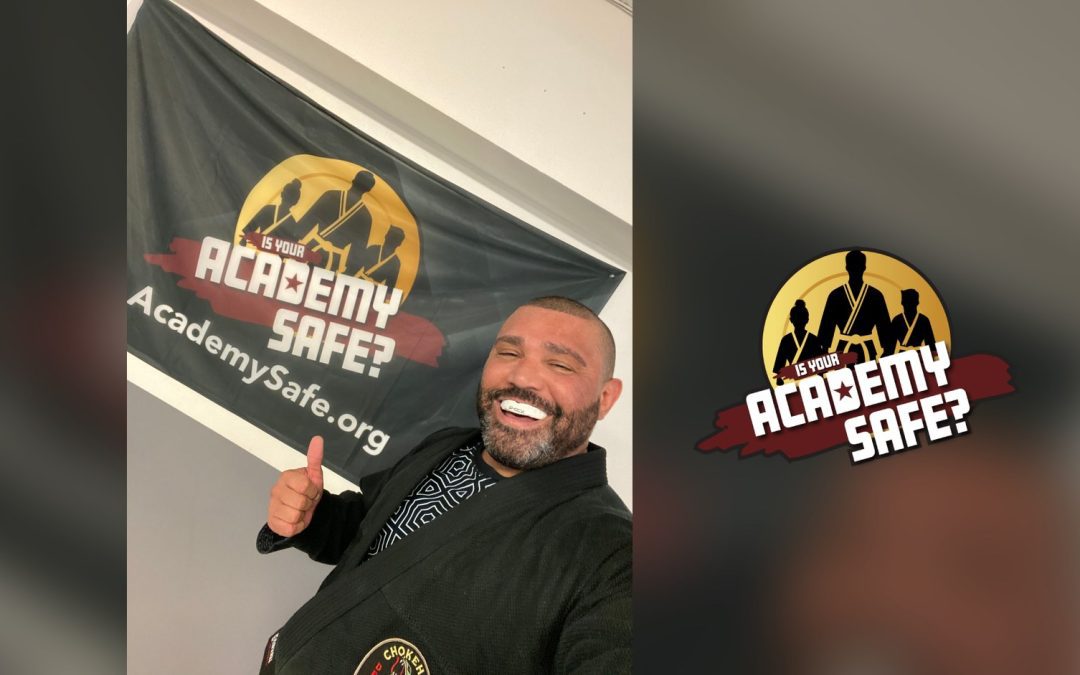
Voyage MIA, the Miami city magazine that profiles local business owners and creatives, recently featured Academy Safe founder and Executive Director Milton Campis in its Hidden Gems series. The interview covers his path into martial arts, his work in digital marketing, and the two experiences that led him to build Academy Safe.
You can read the full interview here: Hidden Gems: Meet Milton Campis of Black Belt Digital Marketing.
Below are the parts of the story that explain why Academy Safe exists and why the work matters to every family that walks into a martial arts school.
A Late Start on the Mat
Milton grew up a boxing fan, watching fights with his dad, and later trained boxing and Muay Thai. He did not start Jiu-Jitsu until a couple of weeks before his 41st birthday, when a family friend opened an academy. Today he is 53 and a black belt.
His advice to anyone who feels like they are starting late is simple:
“Start, even if you feel late… You don’t need to have it all figured out on day one. You just need to show up again tomorrow.”
The Wake-Up Call at 43
At 43, Milton felt chest pain on a Friday night after training. He told himself it was nothing and went back to train again Saturday morning. The pain returned as soon as class ended. His wife convinced him to go to the hospital, and nobody said the words “heart attack” until he was in an ambulance. He received three stents that day and a fourth the next. His main artery was 80 percent blocked.
He was fit, he trained, and he took care of himself. None of that made him immune. Afterward, one question stayed with him:
“I kept wondering what would have happened if my heart had stopped in the middle of a roll. Was there an AED in the building? Did anyone know CPR?”
That question is why two of Academy Safe’s 8 Pillars of Protection focus on emergency readiness: current CPR/First Aid and AED certification for coaches, and an AED physically on site at the academy.
Leaving an Academy After Eight Years
The second experience was harder. After eight years at one academy, Milton left when he learned about alleged misconduct by the owner involving female students.
Both experiences pointed to the same problem. In most places, there is no single standard that martial arts schools have to meet, and parents are left to judge safety from a website, a trial class, or word of mouth.
“Both experiences made me ask how a parent is supposed to know if a school is safe. There wasn’t a good answer, so I built one.”
What Academy Safe Does Today
Academy Safe is a 501(c)(3) nonprofit Martial Arts Safety Registry. It verifies academies of any style against the 8 Pillars of Protection:
- Background Screening for every owner and coach, re-run every two years
- U.S. Center for SafeSport abuse prevention training
- Concussion Training
- CPR/First Aid and AED Certification
- Belt/Rank and Lineage Verification
- Security Cameras in training areas
- Professional Insurance and Business License
- On-Premises AED
Background screening comes first for a reason. It is one of the most important steps an academy can take to help keep predators and groomers away from students. You can read more in why background checks matter in martial arts academies.
Built With the Same Tools That Serve Local Businesses
Milton also owns Black Belt Digital Marketing, an agency in Coral Springs that helps local businesses get found online. In the interview, he explains that he used everything he learned building websites and marketing for clients to build Academy Safe, including the national registry families use today.
What This Means for You
For parents: Before you sign up, use the Find an Academy directory to see which schools have done the work. Our guide to questions to ask before enrolling your child in martial arts can help you have that conversation with any school.
For academy owners and coaches: Show families that your safety practices are real and documented, not just promised. Academy membership is $99 a year. Register your academy or learn how accreditation works.
For everyone who trains: Take one more lesson from Milton’s story. If your chest hurts after class, don’t go train again the next morning. Get it checked out right away. Being tough doesn’t mean ignoring warning signs.
Thank you to Voyage MIA for sharing Milton’s story and helping more families think about safety before they choose a school.
Accreditation does not and cannot guarantee safety. It gives parents and students additional verified information about an academy. If someone is in immediate danger, call 911.