Karate or Jiu Jitsu? It is one of the most common questions parents ask when they start looking at martial arts for their child. Both can build confidence, discipline, and fitness, but they teach very different skills and feel very different on the mat. This guide compares karate and Brazilian Jiu Jitsu (BJJ) for kids, including what each one teaches, how popular each is right now, the safety questions to ask, and how to choose.
Karate vs Brazilian Jiu Jitsu: The Short Answer
- Karate is a striking art. Kids learn punches, kicks, blocks, stances, and forms (kata), usually with a lot of structure, bowing, and group drills.
- Brazilian Jiu Jitsu is a grappling art. Kids learn to control a partner on the ground, escape from bad positions, and win without striking, often through live practice called rolling.
Neither is better for every child. The best choice depends on your child’s personality and goals, and above all on the quality and safety of the academy.
Which Is More Popular Right Now?
Search data shows strong interest in both, with BJJ ahead for adults and karate very strong for kids. According to Google Keyword Planner data for the United States, reviewed by Academy Safe in October 2026:
- “jiu jitsu near me” averages about 135,000 searches a month, compared with about 49,500 for “karate near me.”
- “kids karate near me” averages about 18,100 searches a month, which shows how many parents still start with karate.
- Searches comparing the two, such as “karate or jiu jitsu,” “karate vs jiu jitsu,” and “bjj vs karate,” add up to about 1,680 a month. You are not the only parent asking.
BJJ has grown quickly. The Athletic estimates that about 750,000 people practice BJJ in the United States and around six million worldwide. Karate has a much longer history in American communities and a large base of family focused schools. Across all styles, the Sports and Fitness Industry Association counted 6.61 million Americans practicing martial arts in 2023, as reported by Gymdesk.
Popularity is useful, but it should not decide for you. A great karate school is a better choice than an unsafe BJJ gym, and the other way around.
What Kids Learn in Karate
- Striking and footwork: punches, kicks, and blocks, practiced in the air, on pads, and in controlled sparring.
- Forms (kata): set patterns of movement that build memory, focus, and balance.
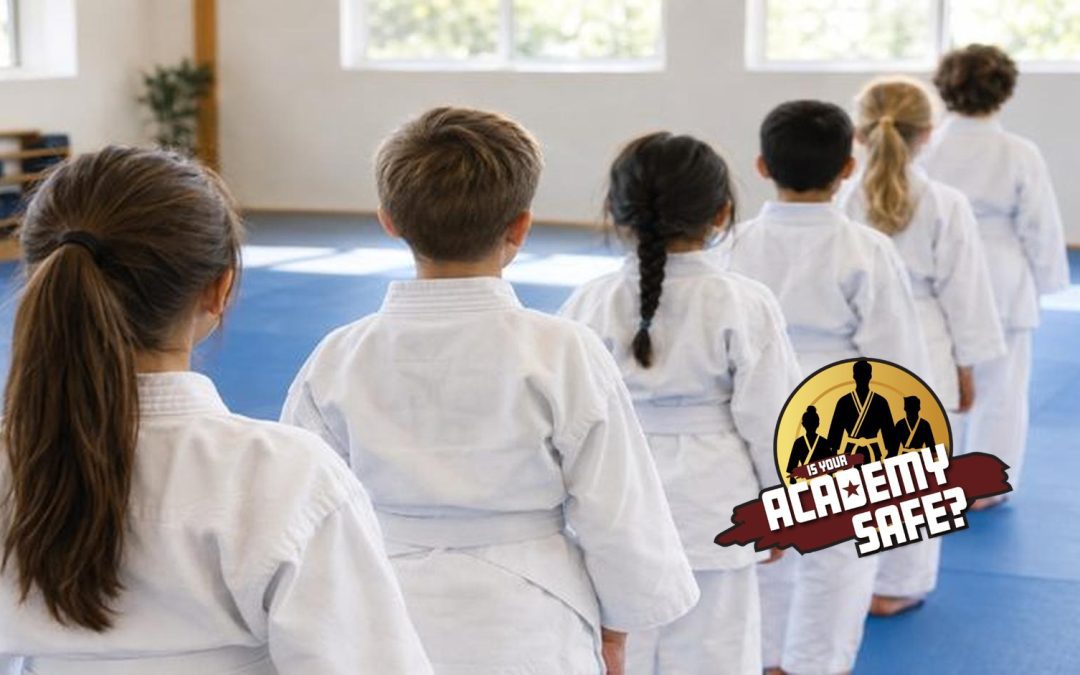
- Structure and etiquette: bowing, lining up, and following clear commands. Many parents like this for younger kids.
- A clear belt path: regular belt testing gives kids visible goals.
Good fit for kids who: enjoy structure, like performing skills, or are not yet comfortable with close contact.
What Kids Learn in Brazilian Jiu Jitsu

- Grappling and control: holding positions, escaping, and getting back to their feet.
- Problem solving: BJJ is often compared to chess, because every position has options and counters.
- Live practice: kids test skills against a resisting partner, which builds real confidence.
- Tapping out: students learn to tap to stop a technique, a simple habit that teaches respect for limits.
- A kids belt path: most BJJ schools use a separate youth belt system with colors such as grey, yellow, orange, and green before adult belts.
Good fit for kids who: are physical, like wrestling around, enjoy figuring things out, or want self defense that does not depend on striking.
Karate vs Jiu Jitsu for Bullying and Confidence
Both arts can help a child who is being bullied. Karate builds posture, a strong voice, and self control. BJJ teaches kids to control a situation without punching, which many parents and schools prefer. Read more in How Martial Arts Can Help Kids Overcome Bullying and Build Confidence.
Safety: What to Watch in Each Style
Every martial art carries some risk. Good coaches manage it.
- Karate: ask how sparring works for kids, whether head contact is allowed, and what protective gear is required. Coaches should know concussion warning signs in kids martial arts.
- BJJ: ask how rolling is supervised, how partners are matched by size and age, and which submissions are allowed for kids. Joint locks and chokes should be taught slowly, with tapping enforced every time.
- Both: look for background checked instructors, an AED on site, coaches certified in CPR and first aid, cameras in training areas, and a clear policy on one on one contact between adults and children.
How to Choose Between Karate and BJJ
- Ask your child. Watch a few videos together and see what excites them.
- Take a trial class in both. Most academies offer a free or low cost first class.
- Watch a kids class from start to finish. Look at how coaches speak to children, how partners are paired, and how mistakes are handled.
- Ask safety questions. Use our list of questions to ask before enrolling your child in martial arts.
- Check the instructor. Learn how to check your child’s martial arts instructor before you sign a contract.
Frequently Asked Questions
Is karate or Jiu Jitsu better for kids?
Neither is better for every child. Karate suits kids who like structure and striking. Brazilian Jiu Jitsu suits kids who like hands on problem solving and grappling. The quality and safety of the academy matter more than the style.
Is Jiu Jitsu safer than karate for kids?
BJJ has no punches or kicks, so there is less risk of head strikes, but it involves joint locks, chokes, and takedowns. Karate sparring can include contact to the body and sometimes the head. In both, supervision, matching partners by size, and age appropriate rules make the biggest difference.
Which is more popular, BJJ or karate?
In October 2026 Google Keyword Planner data, “jiu jitsu near me” had about 135,000 US searches a month versus about 49,500 for “karate near me.” Karate remains very popular for young children, with about 18,100 monthly searches for “kids karate near me.”
What age can kids start karate or BJJ?
Many academies offer classes for children starting around age four or five, often in small groups by age. Ask the school how classes are grouped and how long each class lasts.
Find a Safe Karate or Jiu Jitsu Academy Near You
Whichever style you choose, start with a school that takes safety seriously. Academy Safe accredits martial arts academies under the 8 Pillars of Protection, including background checks, CPR and AED certification, and security cameras. Find an accredited academy near you.
Coach or owner? Register your academy with Academy Safe so parents comparing karate and BJJ can find you.
Academy Safe is a 501(c)(3) nonprofit, and you can support our work here.